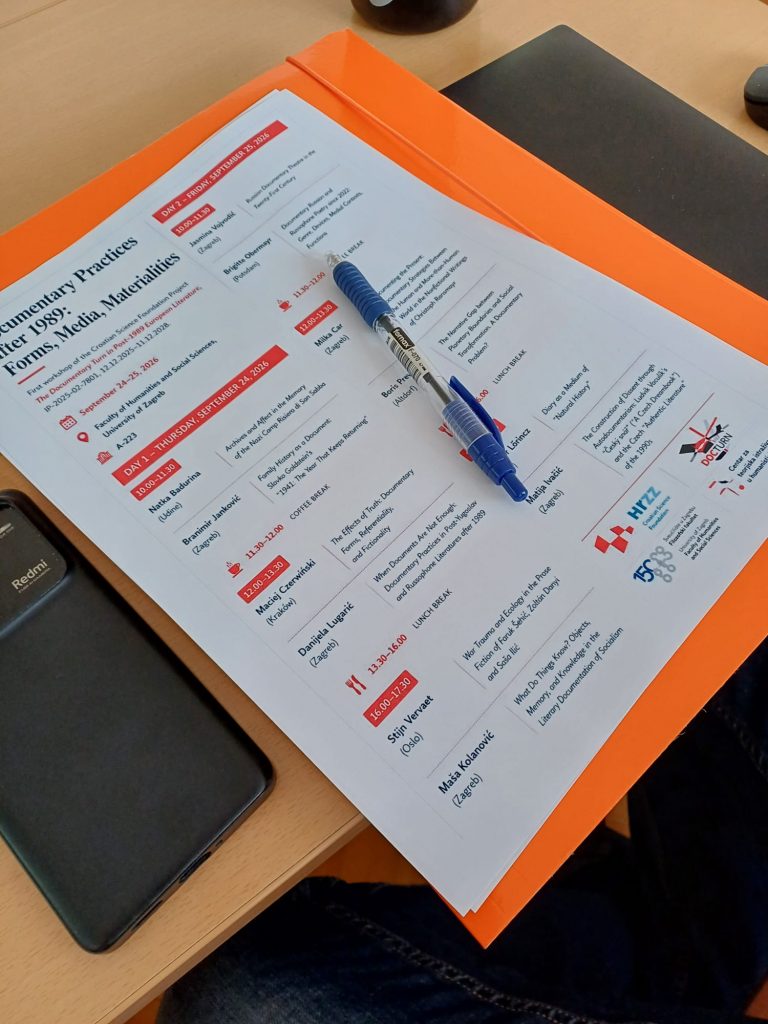
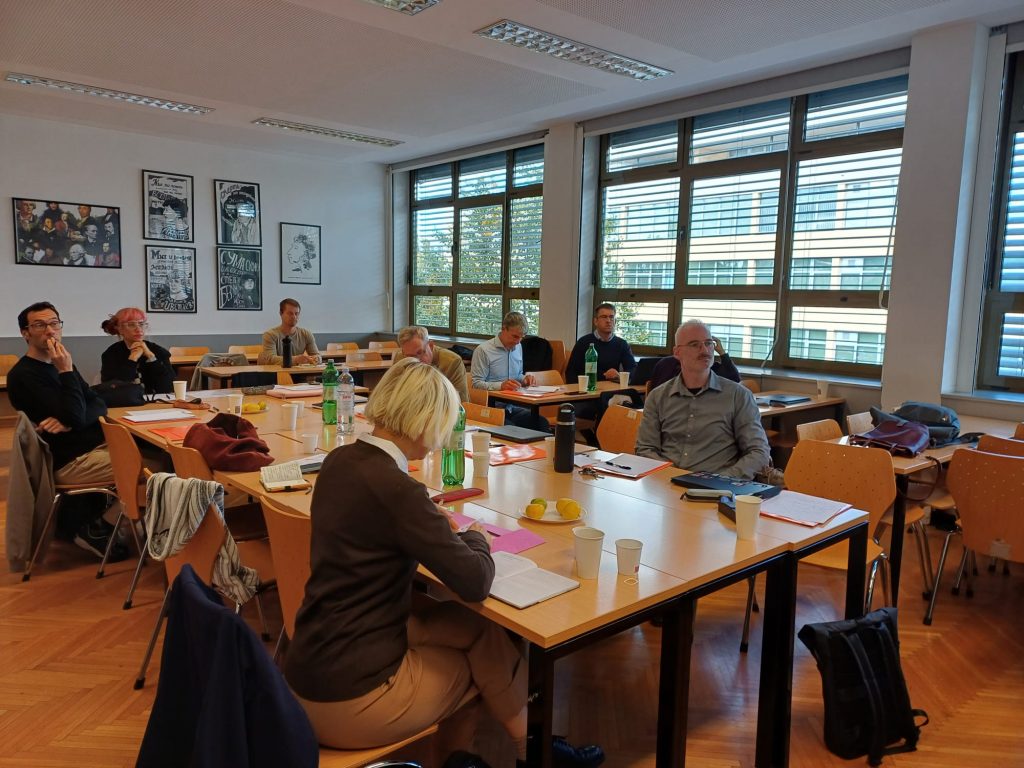
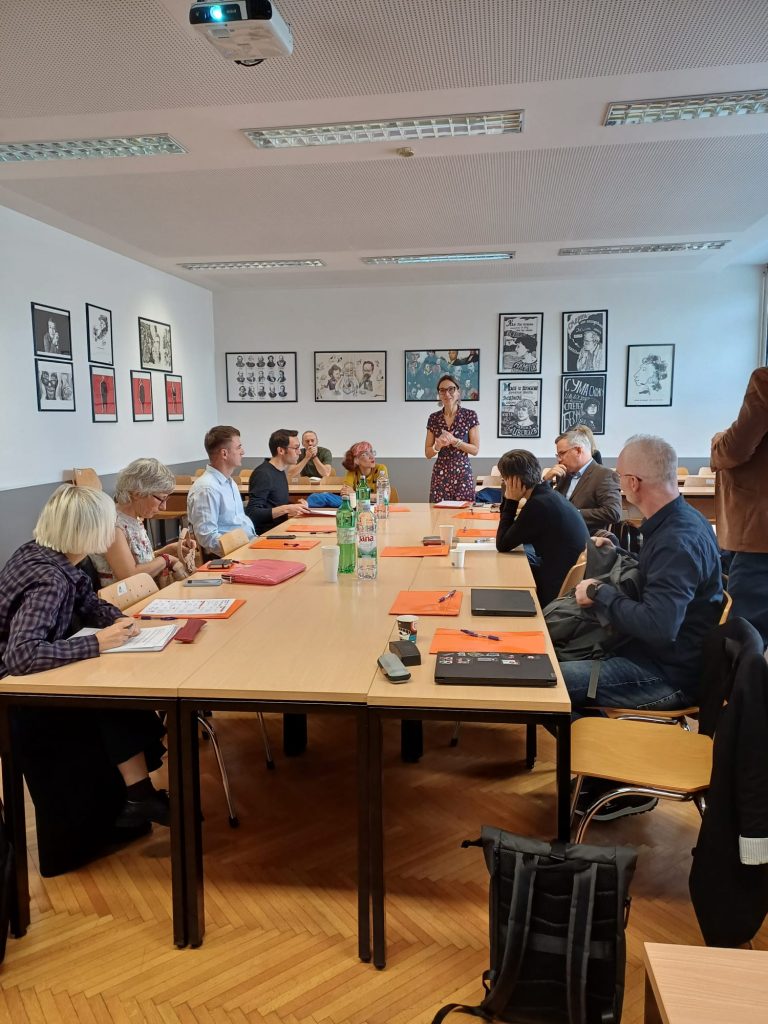
The workshop Documentary Practices after 1989: Forms, Media, Materialities, held at the Faculty of Humanities and Social Sciences, University of Zagreb, on 24–25 September 2026, explored the various ways in which post-1989 European literatures establish and problematize their relationship to extraliterary reality. Taking questions of referentiality and the mimetic contract as its point of departure, presentations by all project team members examined diverse forms, media, and materialities of the documentary—from archives, testimonies, family histories, and objects to diaries, theatre, poetry, and ecological traces. The discussions focused in particular on the epistemological and ethical status of the document: what makes a document a document; what kinds of knowledge and access to past or present reality it enables; how its referential and evidentiary value is transformed through processes of literary shaping, mediation, and remediation; and where the boundaries lie between the document as evidence, as material trace, and as an aesthetically produced effect of reality. Particular attention was paid to the tension between documentary claims to reality and the inevitable mediation involved in any literary representation of it, as well as to the ethical questions arising from this tension. For the next workshop, the participants agreed to narrow the scope of inquiry by focusing on a more sharply defined theoretical problem that emerged from the conceptual and methodological challenges encountered in their individual research.